
What Is Messeregge?
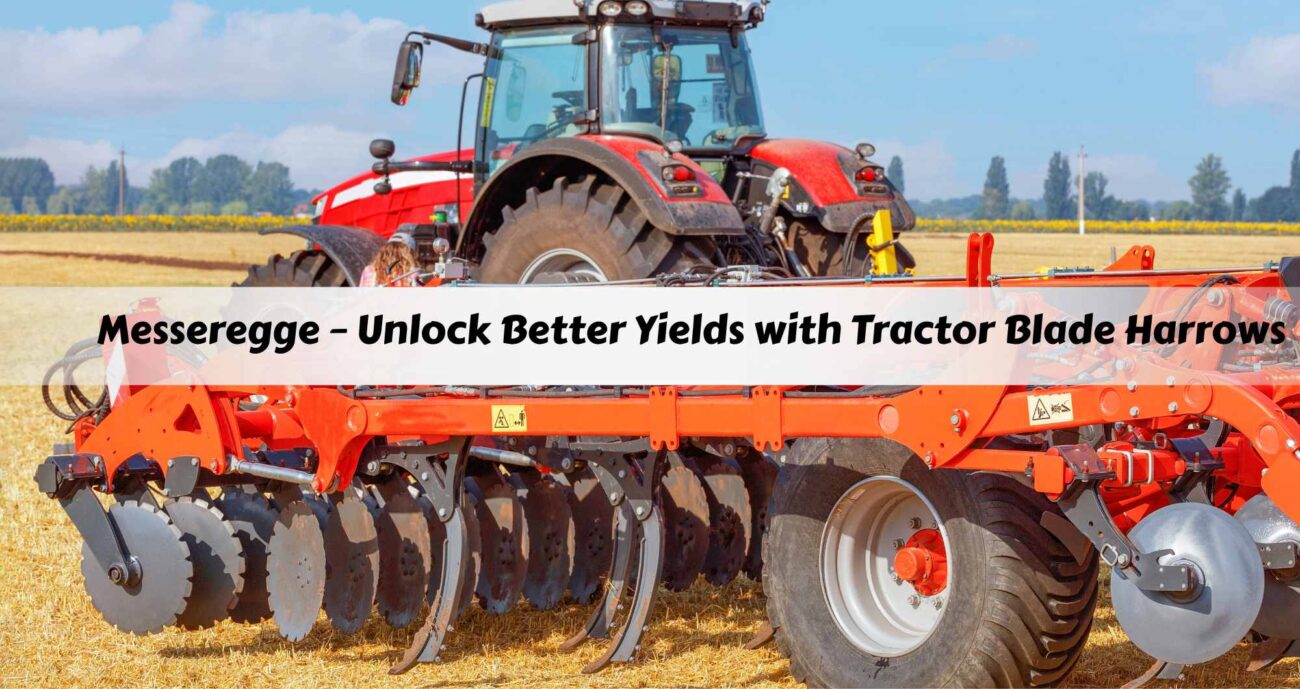
Messeregge is a term that may sound unfamiliar to many, but it has become increasingly relevant in modern farming and agricultural practices. At its core, Messeregge refers to a tractor-mounted blade harrow, a tool specifically designed to prepare the soil for planting, manage residues, and improve crop growth. While it might seem like just another farm implement, its importance cannot be overstated. Farmers around the world rely on Messeregge to enhance productivity, ensure better seedbeds, and maintain soil health over time.
The design of a Messeregge is simple but effective. It consists of a frame fitted with several angled blades that cut, level, and aerate the soil. Traditionally, these tools were manually operated, but with modern tractors, a Messeregge can cover large fields efficiently, saving time and labor. Its precise blade arrangement allows for uniform soil preparation, which is critical for achieving consistent crop growth.
The word “Messeregge” originates from German agricultural equipment terminology—“Messer” meaning blade and “Regge” referring to a harrow. Over the years, this tool has evolved from a simple soil-working implement to a precision instrument that supports modern sustainable farming practices. Today, it is used not only for primary soil preparation but also for post-harvest residue management, leveling fields, and maintaining soil structure.
How Messeregge Works
A Messeregge operates by attaching to the back of a tractor and utilizing its series of blades or tines to break up compacted soil, chop crop residues, and create a uniform surface for planting. As the tractor moves forward, the blades cut through the top layer of the soil, turning and loosening it while simultaneously integrating organic matter from crop residues.
The key to its effectiveness lies in adjustability and precision. Farmers can modify the depth, angle, and spacing of the blades to suit different soil types and crop requirements. For instance, sandy soils may need shallower blade penetration, while heavy clay soils benefit from deeper, more aggressive settings. This level of customization ensures that each field receives the right preparation without overworking the soil.
Another important feature of the Messeregge is its ability to manage residues efficiently. After harvesting crops such as wheat, corn, or soybeans, leftover stalks and plant matter can hinder new seed growth. The Messeregge slices through these residues, distributing them evenly across the field. This not only improves soil coverage but also enhances the decomposition process, returning nutrients to the soil and improving fertility over time.
The tool is also remarkably efficient in leveling fields. Uneven soil can cause water pooling, poor germination, and inconsistent growth. With its adjustable blades, a Messeregge smooths the soil surface, promoting even irrigation and optimal seed placement. This ensures healthier crops and maximized yields.
Benefits of Using Messeregge
Using a Messeregge offers numerous advantages for farmers, both in terms of productivity and soil health. One of the most significant benefits is improved soil aeration. As the blades cut through the soil, they create channels that allow air, water, and nutrients to penetrate more deeply. This process encourages root growth, strengthens plants, and supports overall crop health.
Another advantage is enhanced seedbed preparation. Uniform and well-prepared seedbeds are critical for optimal germination and growth. By breaking up clumps, leveling the soil, and incorporating residues, Messeregge ensures that seeds are planted in ideal conditions. This translates into stronger seedlings and higher overall yields.
Residue management is another major benefit. Crop residues can harbor pests, diseases, or interfere with planting. Messeregge effectively chops and spreads these residues, reducing disease risks and promoting faster decomposition. This adds organic matter back into the soil, improving soil structure and fertility.
Time and labor efficiency is a practical advantage that cannot be overlooked. Traditional soil preparation methods often require multiple passes or manual labor, which is time-consuming and physically demanding. With Messeregge attached to a tractor, farmers can cover large fields quickly, reducing fuel consumption and labor costs.
Additionally, Messeregge promotes sustainable farming practices. By ensuring proper soil aeration and residue management, it helps prevent soil erosion and maintains soil health over the long term. Farmers can achieve higher yields while conserving soil quality for future seasons.
Types of Messeregge Tools
Messeregge tools come in different types and sizes, each suited for specific farming needs. The most common variants are single-frame harrows, multi-frame harrows, and folding or adjustable models. Single-frame harrows are ideal for small to medium fields, offering simplicity and easy handling. Multi-frame harrows cover larger areas and are preferred by commercial farmers for their efficiency.
Folding or adjustable Messeregge models are designed for versatility. These tools allow farmers to adjust blade angles, depth, and spacing to suit different crops and soil types. Some advanced models also include hydraulics, making it easier to lift, adjust, and transport the equipment.
Tractor compatibility is another important consideration. Messeregge tools vary in size and weight, so it is crucial to match the implement with a tractor capable of handling the load. Modern tractors with hydraulic systems and adjustable hitch points are generally best suited for these tools.
Choosing the Right Tractor Attachment
Selecting the right Messeregge for your tractor is critical for efficiency and performance. The first consideration is the size of your field. Larger fields require wider harrows or multi-frame models to cover more area in less time. Smaller farms may benefit from compact, single-frame models that are easier to maneuver.
Next, consider the type of soil you are working with. Sandy soils may require lighter blades, while heavy clay soils need stronger, more robust blades for deep penetration. Adjustable models are advantageous because they allow flexibility across multiple soil types.
Tractor power and compatibility are also key. A Messeregge must match the horsepower and hydraulic capabilities of your tractor. Using a tool that is too large or heavy can strain the tractor and reduce efficiency, while undersized tools may not adequately prepare the soil.
Lastly, think about long-term maintenance and durability. High-quality materials, corrosion-resistant blades, and reinforced frames ensure that the Messeregge performs well over multiple seasons. Investing in a reliable model can save both time and money in the long run.
Preparing Soil with Messeregge
Soil preparation is a critical step in successful farming, and Messeregge plays a central role in this process. Before using the tool, farmers should clear the field of large debris and inspect the soil for compacted areas. Adjusting the blade depth and angle according to soil conditions ensures optimal performance.
As the tractor moves forward, the Messeregge blades slice through the soil, turning and loosening it while incorporating residues evenly. The key is to maintain a steady speed, allowing the blades to work efficiently without over-compacting the soil. Multiple passes may be required for heavier soils, but the result is a uniform, well-aerated seedbed ready for planting.
Proper use of Messeregge also involves timing. Preparing the soil too early or when it is excessively wet can lead to clumping and poor results. Ideal conditions are when the soil is slightly moist but not saturated, allowing the blades to penetrate easily and create a smooth surface.
Maintaining Your Messeregge
Maintenance is crucial to ensure the longevity and performance of Messeregge tools. After each use, it is important to clean the blades and frame to remove soil, residues, and any plant material that may have accumulated. This prevents rusting and keeps the implement in top condition.
Regular inspections are also recommended. Check for loose bolts, worn blades, and frame damage. Replacing worn or damaged components promptly ensures that the tool continues to perform effectively and safely. Lubricating moving parts, particularly in adjustable models, helps maintain smooth operation and reduces wear over time.
Proper storage is another key factor. Keeping the Messeregge in a dry, sheltered area prevents exposure to moisture, which can lead to corrosion. Covering the implement or storing it under a roofed shed is ideal for extending its lifespan.
Common Mistakes to Avoid
Even with a high-quality Messeregge, mistakes can reduce efficiency and crop performance. One common error is setting the blades too deep, which can overly disrupt the soil, damage the tractor, and waste fuel. Conversely, shallow settings may not adequately prepare the seedbed, leading to uneven germination.
Another mistake is ignoring tractor compatibility. Using a tool that is too large or heavy for the tractor can strain the engine and hydraulic system, reducing efficiency and increasing maintenance costs. Always match the implement to the tractor’s specifications.
Failing to clean and maintain the blades is another frequent issue. Residues left on the blades can corrode metal and reduce cutting efficiency. Regular maintenance prevents wear and ensures consistent performance.
Finally, poor timing can compromise results. Using the Messeregge when the soil is too wet or too dry may result in clumps, uneven seedbeds, or ineffective residue management. Understanding local soil conditions and weather patterns is crucial for optimal results.
Tips for Better Crop Yields
Using Messeregge correctly can significantly enhance crop yields. Start by adjusting the blades for uniform soil cutting and leveling, ensuring that seeds are planted at consistent depth and spacing. Proper residue management also improves soil fertility, as decomposed organic matter enriches the soil with nutrients.
Combine Messeregge use with other best farming practices such as crop rotation, organic fertilization, and irrigation management. This synergy ensures that the benefits of the tool translate directly into higher yields.
Monitor the soil after using the tool to ensure the seedbed is uniform and free of compaction. Regularly adjusting the implement based on soil type, moisture levels, and crop requirements ensures that each field receives optimal preparation.
Why Messeregge Is Essential for Farmers
In modern agriculture, efficiency, precision, and sustainability are key. Messeregge fulfills all these needs by enabling farmers to prepare soil quickly, manage residues effectively, and create uniform seedbeds. Its adaptability to different soil types and crops makes it a versatile and indispensable tool.
By using Messeregge, farmers save time, reduce labor, and maximize productivity. Healthier soil and better-prepared fields lead to stronger crops, higher yields, and ultimately, better profitability. In a world where agricultural efficiency directly impacts food supply and sustainability, Messeregge is more than just a tool—it is a strategic investment in farm success.
